


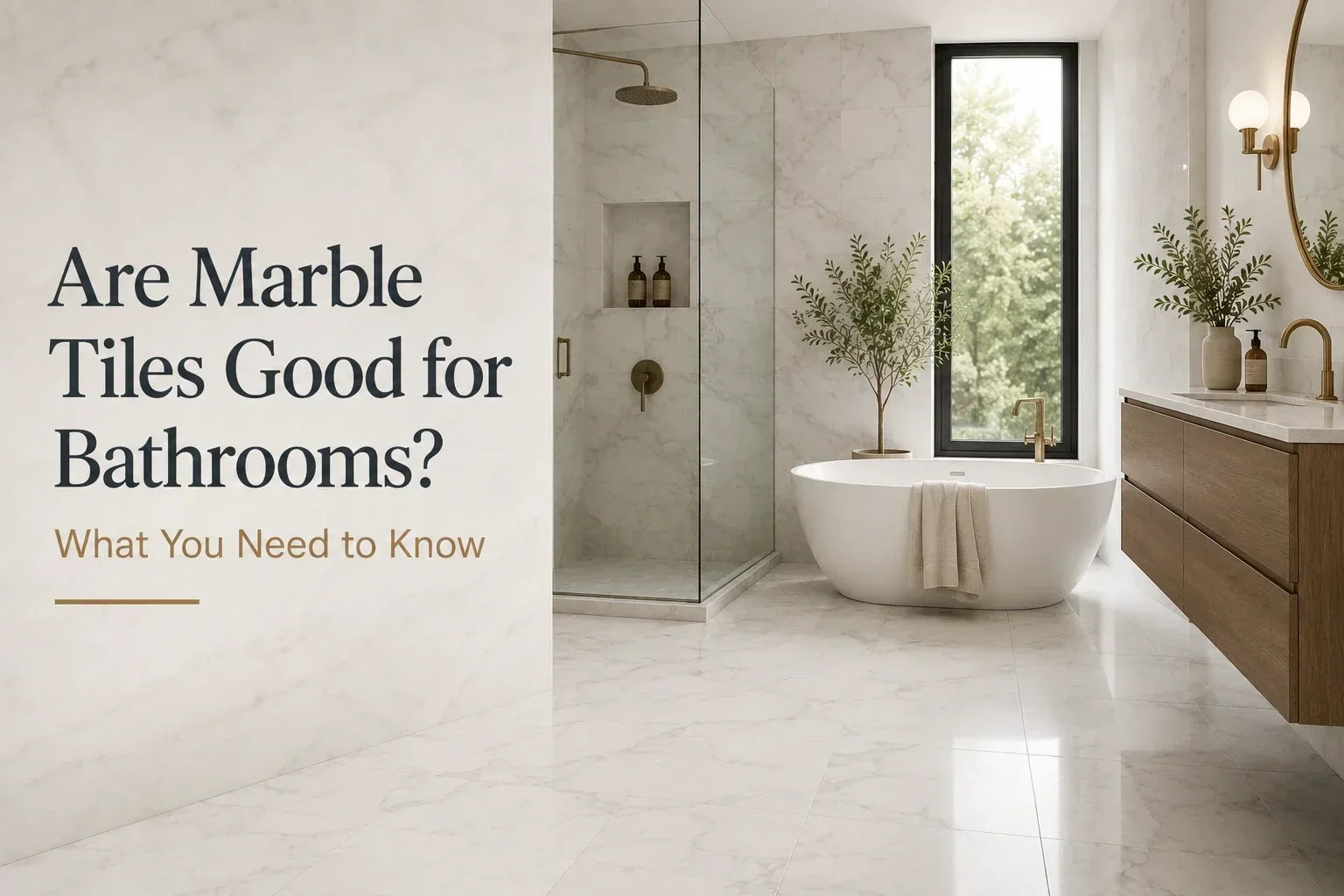
Marble is one of the most requested materials for bathroom renovations, but it's also one of the most misunderstood. Is it durable enough for daily use? Is it too slippery for showers? Does it require special upkeep? Here's an honest, practical look at whether marble tile is a good fit for your bathroom.
Quick Answer
Yes, marble tiles are good for bathrooms when the right finish, sealing, and maintenance approach are used. Honed marble offers strong slip resistance for floors and showers, while polished marble is better reserved for walls and low-traffic vertical surfaces. With proper sealing and pH-neutral cleaning, marble can perform reliably in bathrooms for decades.
The Benefits of Marble in Bathrooms
Timeless, high-end appearance. Marble's natural veining means no two installations look exactly alike, giving bathrooms a custom, luxury feel that's difficult to replicate with manufactured materials.
Cool, comfortable surface. Marble naturally stays cool underfoot, which many homeowners find pleasant, especially in warmer climates.
Long lifespan. With proper care, marble tile can last for generations without needing replacement, unlike some synthetic surfaces that degrade over time.
Value. Natural stone finishes, including marble, are consistently associated with increased perceived home value, particularly in bathrooms and kitchens.
The Challenges to Understand Before You Buy
Porosity. Marble is a porous stone, meaning it can absorb water, oils, and acidic substances if left unsealed. This makes staining a real risk without proper maintenance.
Etching. Acidic products — including some soaps, perfumes, and cleaning agents — can cause dull spots called etching on marble's surface. This is a chemical reaction, not a scratch, and it's more visible on polished finishes than honed ones.
Slip risk with the wrong finish. Polished marble, while beautiful, becomes noticeably slippery when wet. This is the single most common mistake homeowners make — choosing a glossy finish for a shower floor.
Cost. Marble is generally a premium-tier material, priced higher than ceramic or porcelain tile, reflecting both the material itself and the skilled installation it requires.
How to Make Marble Work Safely in a Bathroom
- Choose honed marble for floors and shower bases. The matte finish provides significantly more traction than polished marble.
- Reserve polished marble for walls and backsplashes. These vertical, low-traffic surfaces let you enjoy marble's full shine without slip concerns.
- Seal it at installation and reseal periodically. A quality penetrating sealer is the single most important step in preventing stains and water damage.
- Use pH-neutral cleaners only. Avoid vinegar, citrus-based, and other acidic cleaning products that can etch the surface.
- Consider smaller tile formats for shower floors. More grout lines mean more texture and traction underfoot.
Marble vs. Other Bathroom Tile Materials
| Material | Slip Resistance (Honed/Textured) | Maintenance | Typical Cost Tier |
|---|---|---|---|
| Marble | Good | Higher (sealing required) | Premium |
| Porcelain | Very Good | Low | Mid-range |
| Ceramic | Good | Low | Budget to Mid-range |
| Natural Slate | Very Good | Moderate | Mid to Premium |
Porcelain and ceramic require less ongoing maintenance, but neither matches marble's natural veining and depth of character — which is why many homeowners choose marble specifically for its aesthetic value, accepting the added care it requires in return.
The Bottom Line
Marble tile is a good — and often excellent — choice for bathrooms, as long as it's specified correctly: honed finishes underfoot, sealing on a regular schedule, and pH-neutral cleaning products. When those conditions are met, marble performs well in wet environments while delivering a look that few other materials can match.
If you're comparing options, Flair Decos offers a curated selection of marble bathroom tile from trusted brands like MS International and Daltile, with a range of finishes and vein patterns to fit both design goals and practical performance needs.
Frequently Asked Questions
Is marble too slippery for bathroom floors? Polished marble can be too slippery for bathroom floors, but honed or textured marble provides adequate slip resistance for safe daily use.
Does marble stain easily in bathrooms? Marble can stain if left unsealed, since it's a porous stone. Regular sealing significantly reduces the risk of staining from water, soap, and other bathroom products.
Is marble worth the cost for a bathroom renovation? For many homeowners, yes — marble's durability, timeless appearance, and association with increased home value make it a worthwhile investment despite its higher upfront cost compared to ceramic or porcelain.